 |
| Pictured: Someone who likes LOTR more than I do.1 |
As you’ve probably gathered, I’m a little excited about this movie – but I don’t think that’s the only reason I couldn’t stop
thinking about Hobbits during our discussion of conservatism. I’d argue that Hobbits truly are the
conservatives of Middle Earth. Edmund
Burke and Hannah More would certainly applaud the Hobbits’ outlook on
life. The typical Hobbit hates trouble, respects
tradition, and appreciates myth and illusion.
Classical conservatism condemns radical change. In his Reflections
on the Revolution in France, Burke criticizes the chaos of the French revolution. 2 Burke believes that abrupt, significant change is silly and often
dangerous; he would advise people to stick to the established order of things. Burke
wouldn’t have a hard time illustrating the dangers of the French revolution to Hobbits. At the beginning of The Hobbit, Bilbo describes the conservative mindset of his race: "We are plain quiet folk and have
no use for adventures. Nasty disturbing uncomfortable things! Make you late for
dinner! I can't think what anybody sees in them."3
 |
| Burke and Bilbo. BFF's 4 Life.4,5 |
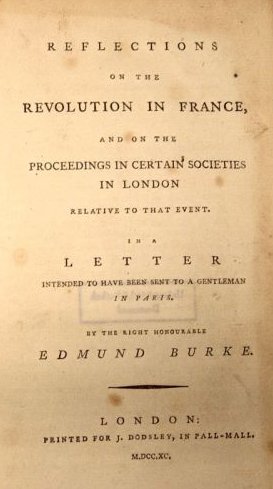 |
| Translation: If it ain't broke, don't fix it.7 |
Burke’s distaste for change stems from his trust of the status quo. He argues that the conventions of society must have merit because they have stood the test of time. He explains, “It is with infinite caution that any man ought to venture upon pulling down an edifice which has answered in any tolerable degree for ages the common purposes of society, or on building it up again, without having models and patterns of approved utility before his eyes” (Burke).
 |
| Hannah More, clearly disappointed with Bilbo.10 |
Another key feature of classical conservatism is an appreciation
for myth and illusion, “the sentiments which beautify and soften private
society” (Burke). Burke believes that
everyone should forget about radical change, and find satisfaction in their
current situation. The illusion of
comfort, he argues, allows life to continue without violent disruptions. In Village
Politics, the comforts of home pacify Jack: “My cottage is my castle; I sit
down in it at night in peace and thankfulness, and 'no man maketh me afraid'" (More). Likewise, the Hobbits value “the decent
drapery of life” (Burke).
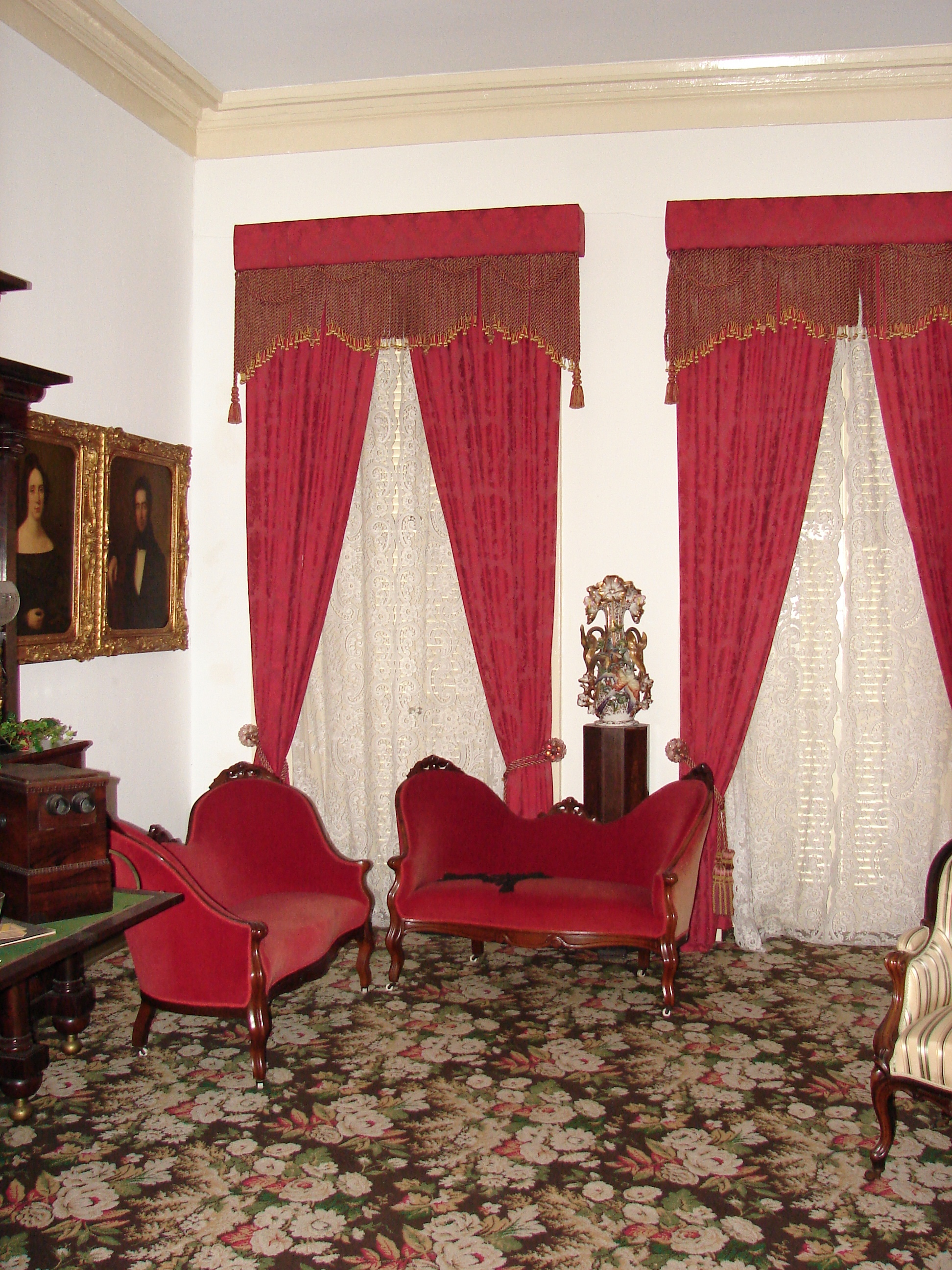 |
| No, not literal drapery. The metaphorical kind.11
They are content with their ignorance about the outside
world as long as they are cozy and comfortable. Bilbo’s exhausting adventure
makes him long for his once sheltered existence: "Bother burgling and everything to do with it! I
wish I was at home in my nice hole by the fire, with the kettle just beginning
to sing!"12 At the end
of his travels, he desires more than ever to return to myth and illusion: "I wish now only
to be in my own armchair!"13
|
 |
| The Shire a.k.a the cutest place in the world!14 |
But this is just my theory.
What do you guys think? Are there ways in which Hobbits deviate from
conservatism? Does Tolkien mean for us
to sympathize with the Hobbits – or are we supposed to find their conservative outlook
silly? Do other creatures of Middle
Earth represent other philosophies?
Well, whether they’re conservative or not, I’m crazy for
Hobbits. Excuse me while I watch more
YouTube trailers.
1 http://upload.wikimedia.org/wikipedia/commons/8/85/Gandalf02.JPG↩
2 Edmund Burke, Excerpts from Reflections on the Revolution in France.↩
3 http://www.shmoop.com/hobbit/exploration-quotes.html↩
4 http://www.shmoop.com/hobbit/exploration-quotes.html↩
5 http://upload.wikimedia.org/wikipedia/commons/1/14/Edmund_Burke2_c.jpg↩
6 http://upload.wikimedia.org/wikipedia/commons/b/ba/Bilbo_Bolsón.png↩
7 http://upload.wikimedia.org/wikipedia/commons/3/3c/BurkeReflections.jpg↩
8 http://www.shmoop.com/hobbit/the-home-quotes.html↩
9 Hannah More, Village Politics.↩
10 http://commons.wikimedia.org/wiki/File:Hannah_More.jpg↩
11 http://upload.wikimedia.org/wikipedia/commons/6/66/1850s_House_Red_Drapes.jpg↩
12 http://www.shmoop.com/hobbit/the-home-quotes.html↩
13 http://www.shmoop.com/hobbit/the-home-quotes-3.html↩
14 http://upload.wikimedia.org/wikipedia/commons/2/28/Hardbottle.jpg ↩

No comments:
Post a Comment